
Modern warfare is as much a contest of sustainment as it is of firepower. Adversaries no longer limit their strategy to kinetic engagements. They systematically target supply routes, transportation nodes, data pathways, and the Defense Industrial Base itself. The mission environment has fundamentally shifted from a focus on contested logistics alone to an operating reality defined by contested, congested, and competitive logistics. This operating reality is not an edge case. It is the baseline planning assumption that every Department of War (DoW) team must now accept.
The scale of the challenge is staggering. The DoW depends on 200,000+ suppliers to build and sustain operational capability. USINDOPACOM alone covers roughly half of Earth’s surface, an area where sea lanes carry half of global container cargo and 70% of shipborne energy. Each day, the joint enterprise manages hundreds of airlift sorties, 15+ ships underway, and 1,000+ freight shipments across global theaters. At that scale, fragmented visibility is not an inconvenience. It is a strategic vulnerability.
From In-Transit Visibility to Operational Control
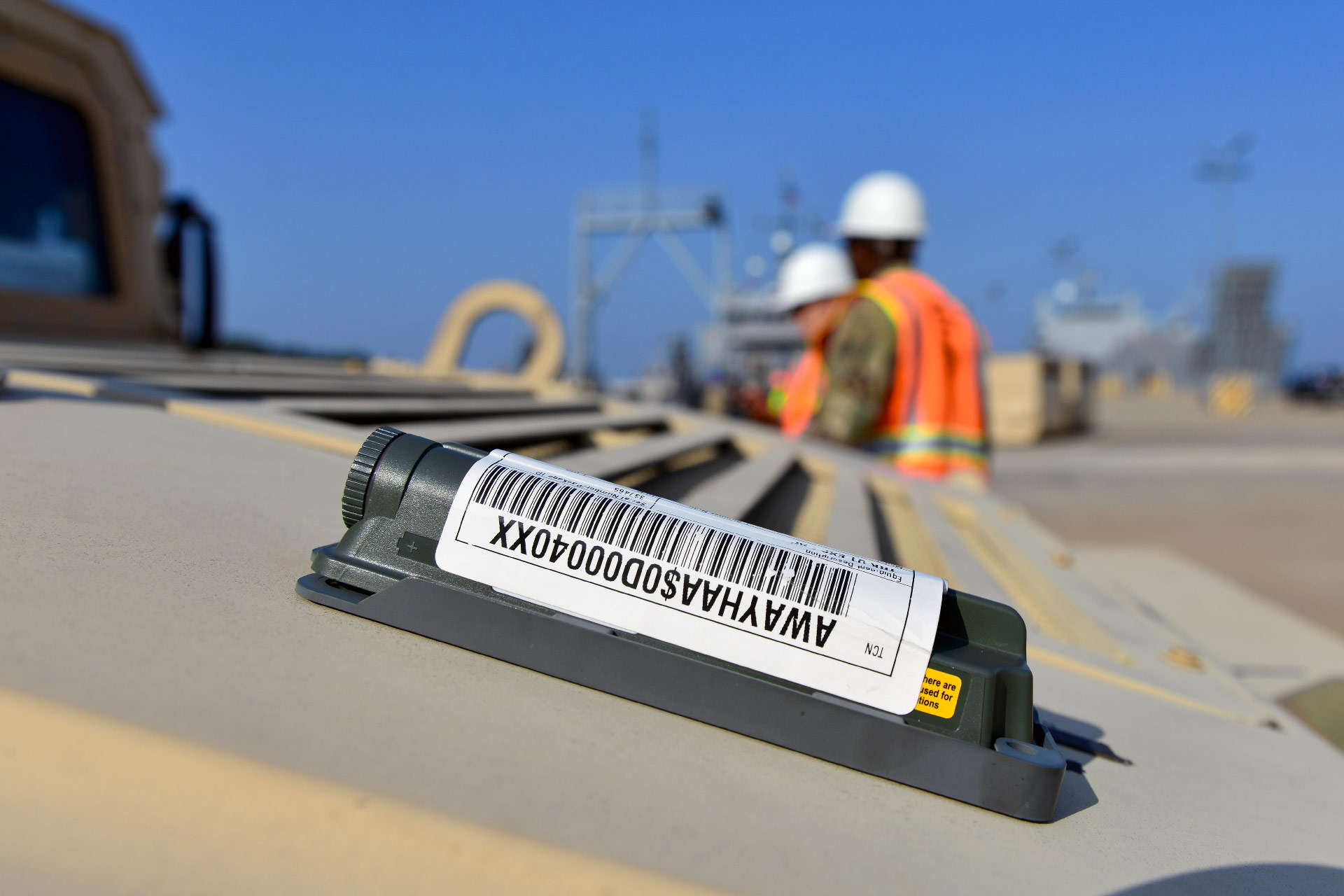
The answer begins with In-Transit Visibility (ITV), which means knowing precisely where every asset is, its condition, and when it will arrive. Raw location data alone is not enough. The DoW needs a system that transforms ITV data into actionable decisions, delivers commitments that hold under pressure, and provides an operational picture that gives commanders real options in real time. That system rests on three interdependent pillars: a Digital Core, VAULTIS data principles, and Available to Promise (ATP). Together, these pillars do more than improve logistics execution. They create the authoritative data layer that makes artificial intelligence a force multiplier for decisional dominance in contested, congested, and competitive environments.
The Digital Core: One Source of Truth Across the Entire Enterprise
In-transit visibility fails when the underlying data infrastructure is fragmented. Today’s DoW sustainment environment runs on more than 400 separate IT systems. Each system carries its own data definitions, handoff protocols, and reconciliation rhythms. When a shipment moves across three commands and two transportation modes, it passes through multiple disconnected data environments, each one introducing latency, ambiguity, and risk of loss. ITV signals get fragmented, delayed, or dropped entirely as assets cross system boundaries, leaving commanders without the continuous, end-to-end picture they need.
Fragmentation at Enterprise Scale
The Digital Core eliminates this fragmentation. Built on a harmonized SAP ERP, Extended Warehouse Management (EWM), and Transportation Management (TM) architecture, the Digital Core unifies master data, transactional integrity, and movement orchestration at enterprise scale. Every asset, from the Defense Industrial Base to the last tactical mile, flows through a single coherent data environment where the enterprise captures ITV data once, maintains it continuously, and makes it available to every authorized decision-maker without translation or reconciliation.
Consolidation as Risk Reduction
The strategic objective is clear: consolidate from 400+ systems to fewer than 170 by FY2029. The DoW has already retired 90+ IT systems since FY2020, steadily improving data quality, strengthening interoperability, and reducing the reconciliation burden that slows decision-making. Each retired system removes a potential ITV blind spot and a potential attack surface. Each consolidated data pipeline is a supply chain that is harder to disrupt.
Modernized ITV within the Digital Core does more than track locations. It elevates basic location points into enriched operational objects, embedding mission context, priority, risk profile, and projected delivery timelines directly in the data. This foundational shift is what makes VAULTIS principles enforceable, ATP commitments defensible, and AI-driven logistics analysis possible in practice.
VAULTIS: The Data Principles That Make ITV Trustworthy
A Digital Core can consolidate data, but consolidation alone does not guarantee that leaders can trust what they see. ITV information in contested environments is subject to degraded network feeds, adversary deception, sensor gaps, and update latency. Without a principled framework for data quality, even a unified system can produce a false picture. A false picture delivered at decision speed is more dangerous than no picture at all.
VAULTIS addresses this directly. The framework defines the qualities that ITV and logistics information must possess to be actionable in contested conditions: Visible, Accessible, Understandable, Linked, Trustworthy, Interoperable, and Secure. These are not aspirational labels. They are operational requirements, each one targeting a specific failure mode that has caused sustainment breakdowns in real operations:
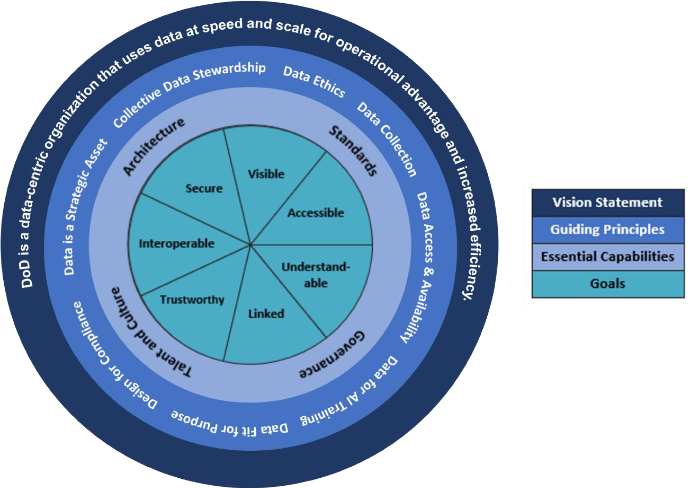
- Visibility: Ensures that assets do not disappear from the ITV picture after debarkation, a problem that is among the most persistent and costly in joint logistics.
- Accessibility: Means the right decision-maker can retrieve the data they need without navigating multiple portals.
- Understandability: Enforces common semantics across organizations so that “in transit” means the same thing to every command in the joint force.
- Linked: Connects ITV location data to mission context, priority, and downstream impact.
- Trustworthy: Provides auditable lineage so leaders know where the data came from and how recently it was verified.
- Interoperability: Allows ITV data to move cleanly across organizational and system boundaries without manual translation.
- Security: Protects the data architecture from exploitation and manipulation by adversaries.
The operational results validate the framework. VAULTIS delivers measurable results under contested conditions. VAULTIS‑disciplined processes reduced data search time by 96% and increased update frequency 24x, collapsing the sense‑to‑understand‑to‑decide cycle and shifting sustainment from reactive reporting to proactive execution. Automated data capture accelerates these gains. Passive RFID testing at DLA distribution portals achieved 100% dock-door read accuracy, reducing manual error, tightening handoff control, and improving ITV reliability under operational pressure.
Available to Promise: How ITV Data Becomes Delivery Commitments
ITV tells you where things are. ATP tells you when they will arrive, and whether that arrival date is a commitment you can stand behind. This distinction matters enormously at the operational level. A commander does not need a map of where assets currently sit. They need a defensible answer to the question: “Can I count on this?”
ATP as the Delivery Commitment Engine
ATP serves as the DoW’s delivery commitment engine, drawing directly on ITV data as its primary real-time input. By combining live ITV position and status updates with inventory positions, allocations, planned receipts, transportation capacity, and route risk, ATP precisely calculates the quantity that can be delivered, by what date, and with what level of confidence. The output is not a forecast. It is a commitment: this quantity, by this date, with this level of confidence. Leaders can publish that commitment upward to higher command and downward to the unit that needs the materiel, and defend it under scrutiny.
Continuous Recalculation Under Operational Conditions
The power of ATP comes from the continuous loop it forms with ITV, the Digital Core, and VAULTIS. Because ITV data flows into a consolidated, trustworthy Digital Core governed by VAULTIS principles, ATP calculations remain grounded in operational reality rather than static planning assumptions. When an ITV feed indicates a shipment has been diverted or delayed, ATP recalculates immediately. When a route comes under threat, and ITV confirms teams have rerouted assets, ATP updates the commitment and flags the gap before it becomes a mission failure.
For this reason, DoW sources describe ATP as the operational north star of contested logistics, because it compels the entire enterprise to convert ITV data into commitments that hold under pressure. When ATP fully integrates with the Logistics COP and leaders delegate decision-making authority to the edge, the enterprise shrinks coordination loops, reduces downtime, and delivers a sustainment promise the force can rely on.
The AI Advantage: How VAULTIS, ITV, and ATP Create the Data Layer for Decisional Dominance
Artificial intelligence cannot operate on bad data. AI models trained on fragmented, inconsistent, or unverified logistics information will produce unreliable outputs, and in a contested environment, an unreliable AI recommendation is worse than no recommendation at all. This data foundation is the fundamental reason why the Digital Core, VAULTIS, and ITV are not just logistics improvements. They are the prerequisite data layer that makes AI a genuine force multiplier for the DoW.
The Data Foundation AI Requires
When the enterprise enforces VAULTIS disciplines within a consolidated Digital Core fed by continuous ITV data, it creates a high-fidelity, continuously refreshed, enterprise-wide logistics data environment, exactly the structured, trustworthy, interoperable foundation that AI and machine learning systems require to generate predictions and recommendations that commanders can act on with confidence. Without this foundation, AI produces noise. With it, AI produces a decisional advantage.
Operational AI Applications
The applications are direct and operationally consequential. Predictive disruption detection uses AI to analyze ITV patterns, route risk signals, and historical delay data to surface threats to ATP commitments before they materialize, giving planners hours or days of warning rather than minutes. Autonomous rerouting recommendations allow AI to evaluate alternative routing options across the JDDE in real time, presenting commanders with pre-scored courses of action ranked by delivery probability and risk exposure. Demand forecasting and prepositioning use AI to anticipate consumption rates and ‑position materiel closer to the point of need, reducing the reaction time required when adversaries disrupt primary supply routes.
Leading the Decision Cycle
In a contested, congested, or competitive operating environment, the decisive advantage belongs to the force whose AI systems are working from better data faster. An adversary’s logistics network operating without VAULTIS‑quality ITV data will produce AI recommendations that lag reality. The DoW’s network, built on a unified Digital Core with continuous ITV feeds governed by VAULTIS principles and converted into ATP commitments, produces AI recommendations that lead reality, anticipating friction, surfacing alternatives, and compressing the decision cycle before adversaries can exploit the gaps.
This approach delivers decisional dominance in practice, as AI‑augmented commanders act on insights the adversary cannot yet see, derived from data the adversary cannot match in quality, timeliness, or trust. The Digital Core, VAULTIS, ITV, and ATP are the architecture that makes this possible. AI is the multiplier that makes it decisive.
Proof Under Pressure: Visibility, Decision Speed, and Enterprise Rehearsal
The integration of Digital Core, VAULTIS, ATP, and ITV, the data foundation for AI-driven sustainment, is not theoretical. Operational teams tested this architecture against real operational demands, and the results provide a clear blueprint for what contested logistics resilience looks like in practice.
- Sustained Operations Under Active Threat: Naval teams maintained uninterrupted logistics operations in the Red Sea for eight consecutive months under active threat conditions, demonstrating not only technical capability but also the operational endurance that contested sustainment demands. ITV continuity throughout that campaign was not accidental; it was the product of deliberate architecture designed to survive degraded and denied environments.
- Enterprise Stress Testing at Scale: The Navy’s contested logistics wargame engaged 200+ participants from 40+ organizations, stress‑testing coordination, ITV data integrity, and decision authority under realistic pressure scenarios. These exercises validate the architecture before it is needed and reveal gaps that can be closed in rehearsal rather than discovered in crisis.
- Joint Industry Alignment: An enterprise industry day brought together 12 organizations to collaboratively address contested ITV from the port to the last mile. Solving this problem requires the joint force and its industrial partners to share a common operating picture, common data standards, and a common commitment to the delivery promises that ATP produces.
When teams frame, measure, and rehearse outcomes this way, sustainment becomes repeatable and defensible under stress. Leaders publish commitments with confidence, maintain tempo despite adversary action, and scale successful patterns across theaters and partners without reinventing the process for each new scenario.
Reducing Attack Surface: Streamlined Systems and Automated Capture
In contested environments, every manual handoff and ITV data gap is a vulnerability. DoW teams harden the flow by integrating resilience into systems and practice so logistics execution withstands degraded networks, adversary interference, and compressed timelines. Three practices institutionalize that resilience:
- Unified discovery: Converges ITV, movement, and inventory data into a single source of truth, so units stop multi‑portal searching and eliminate the visibility loss that typically occurs after debarkation.
- Portfolio rationalization: Reduces fragmentation to improve interoperability, simplify execution, and create a predictable environment for ITV data quality and system performance.
- Automatic data capture: Drives modern identification technologies that increase the reliability, fidelity, and timeliness of ITV data with minimal human intervention, leading to automated handoffs, vulnerabilities closed, and decisions made faster.
Institutionalizing these practices turns resilience into muscle memory. Plans absorb disruption without losing momentum, timelines remain defensible at the edge, and supply continuity holds even when routes, nodes, or ITV data sources come under sustained pressure. The end state is a hardened execution spine that supports decision speed, preserves commanders’ options, and feeds the high‑quality data stream that AI systems require to generate reliable recommendations.
The AI Advantage: How VAULTIS, ITV, and ATP Create the Data Layer for Decisional Dominance
Agility determines whether sustainment supports or slows the mission. When the Logistics COP integrates ITV into the operational picture and leaders delegate decision-making authority to the edge, coordination loops shrink, and the force can reprioritize, reroute, and recommit in minutes rather than hours.
The scale demands it. Each day, the DoW joint sustainment enterprise manages hundreds of airlift sorties, 15+ ships underway, and 1,000+ freight shipments across global theaters. The loop cannot close through headquarters approval chains. ATP decisions must be executable at the edge, informed by a continuously updated ITV picture within the digital core, and backed by VAULTIS-quality data that commanders can trust without verification. AI-generated course-of-action recommendations, derived from that same data layer, further accelerate this cycle while surfacing options in seconds that would otherwise require hours of manual analysis.
As conditions shift, ITV feedback continuously refines ATP decisions and updates risk models. This feedback loop keeps the digital core aligned with operational reality rather than static assumptions, ensuring that the commitment the force made yesterday still reflects the conditions the force faces today, and that AI models remain calibrated to the operating environment rather than to outdated baselines.
Contested Logistics at Scale: What the DoW Does Next
At the theater scale, contested logistics amplifies risk, tempo, and outcomes. DoW teams that lead in this environment are not waiting for perfect conditions. They are taking three deliberate, mutually reinforcing actions:
- Consolidate and harmonize: Accelerate system rationalization to eliminate fragmented visibility, which creates operational and security vulnerabilities and prevents AI from producing reliable outputs.
- Discipline the data: Institutionalize VAULTIS principles so every ITV handoff across the JDDE produces trustworthy, interoperable, and secure data that commanders and AI systems can act on with confidence.
- Make commitments ATP can defend, and AI can improve: Embed Available to Promise as the standard for delivery accountability, fuse it with continuous ITV and the Logistics COP, and layer AI on top to detect disruptions earlier, surface better alternatives faster, and improve forecast accuracy under pressure.
When these actions operate together, the force gains more than efficiency. Continuous ITV feeds a trustworthy Digital Core. VAULTIS ensures decision‑makers can act on the data. ATP converts visibility into commitments that hold under pressure. AI, built on that authoritative data layer, multiplies the speed and quality of decisions across the enterprise, enabling the force to anticipate friction, preserve options, and sustain tempo even as adversaries actively attempt to interfere.
Let’s discuss how to move from fragmented visibility to a Common Operational Picture (COP) that improves readiness and delivers AI-driven decisional dominance in contested conditions.