A U.S.-based fiberglass and insulation manufacturer. Their products help make sustainable insulation with modern manufacturing techniques and materials.








We lead the way in implementing SAP Digital Asset Management solutions for Fortune 100 companies.
Good asset management is crucial for smooth manufacturing and fleet operations. Industry 4.0 solutions help you use your maintenance budget wisely and keep assets running smoothly, ensuring production and maintenance work well together.
Our experts guide you in using digital tools like condition-based monitoring, machine learning, and IIoT to improve your asset management.
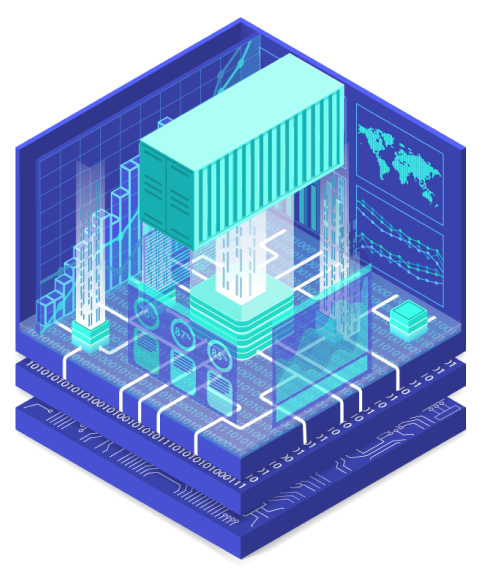
Inconsistent definitions of Machine Criticality.
Maintenance workforce – size, skills, and where to focus energy.
Where and when to apply predictive maintenance?
When to invest in IIoT live data integration?

DRCM is C5MI’s digital solution that organizes machinery functions, tracks equipment importance and failure modes, and creates live monitoring strategies for maintenance. Instead of using spreadsheets, all data is managed in cloud-based applications integrated with the core ERP system. SAP’s asset performance management suite is used to help build a unified view of asset performance.
DRCM connects assets using Industrial Internet of Things (IIoT) technologies, linking production systems with business processes. This digital approach improves maintenance efficiency, reduces costs, and increases asset availability by predicting and preventing failures before they disrupt production.
DRCM reduces unplanned downtime, enhancing operational efficiency, improving quality, and boosting overall productivity.
Machine learning predicts equipment failures before they happen, reducing downtime and improving reliability.
Condition-based maintenance versus planned leads to fewer resources required, ensuring equipment needs less maintenance.
Stage 6
The system acts. The team manages strategy, not execution.
At full maturity, the supply chain does not wait for human decisions on routine operational matters — it makes them. Robots execute warehouse tasks. RPA handles transactional processes. AI optimizes routing, scheduling, and inventory positioning continuously. The organization’s people shift from executing operational decisions to overseeing the systems that make them.
C5MI’s Automation Center of Excellence, AI practice, and Industry 4.0 capabilities are built for organizations ready to take the human out of the loop — deploying robotics, RPA, and autonomous execution as a coordinated operating model, not a collection of disconnected tools.
Stage 5
Stop reacting to what happened. Start managing what is coming.
This is the shift from reactive to proactive. The organization has real-time visibility and the ability to respond — but it is still responding to events after they occur. Predictability means the system anticipates what is going to happen: demand fluctuations, supply disruptions, inventory shortfalls, production risks. Leaders stop firefighting and start managing forward.
C5MI’s Live Warehouse predictive capabilities and SCAR’s Network and Inventory Optimization module align inventory policy and supply chain planning to what is actually going to happen — shifting leadership from reactive management to forward confidence.
Stage 4
You can see what is happening. Now the operation can respond to it.
Visibility changes what you know. Adaptability changes what you do with it. At Stage 4, real-time data stops being observed and starts driving action — dynamic task reallocation, exception-triggered responses, workforce adjustments made in minutes rather than hours. The operation develops the capability to adapt to what the live data is telling it, not what a shift debrief reveals afterwards.
SCAR’s Workforce Enablement module and C5MI’s Live Warehouse event-driven capabilities give operations the governance structures and real-time response tools to act on what the data is telling them — consistently, across every site and shift.
Stage 3
The data exists. Now let the system tell you what is happening.
At this point, the integrations are in place and the data is there — but it is not being surfaced in real time. Operations are still managed from lagging reports, periodic system checks, and verbal updates. The shift this stage delivers is simple but significant: instead of finding out what happened, you see what is happening — live status across warehouse, manufacturing, and logistics.
C5MI’s Live Warehouse capability and SCAR’s Live Visibility module turn integrated data into a live operational picture — giving supervisors and leadership real-time status across every facility and function.
Stage 2
The systems exist. They are not talking to each other
This is where foundational platforms are in place but operating in isolation. IT systems hold transactional data. OT systems — sensors, equipment, production lines, warehouse automation — generate operational data. The two worlds are not connected, which means decisions are still made on incomplete information. Cross-site visibility does not exist.
C5MI bridges IT and OT through its Digital Core integration capabilities and SCAR’s EWM Transformation module — aligning systems to operational reality and connecting data across sites and functions.
Stage 1
The platform is invested in. Now it needs to perform.
C5MI implements, standardizes, and sustains SAP Digital Core systems — EWM, S/4HANA, TM, and EAM. Most organizations arrive here having made the investment but not yet seeing the performance. The technology is deployed. The gap between what the system was designed to deliver and what the operation is actually getting is where C5MI starts.
C5MI implements, standardizes, and sustains SAP Digital Core systems — delivering the performance the investment was designed to produce, and maintaining it long after go-live.