




Sharper fleet visibility, without the infrastructure lift. C5MI pairs Slamcore’s vision-based positioning and perception with our warehouse modernization practice, bringing RTLS-grade tracking to material handling fleets without beacons, wearables, or facility rework.
Wearables Required
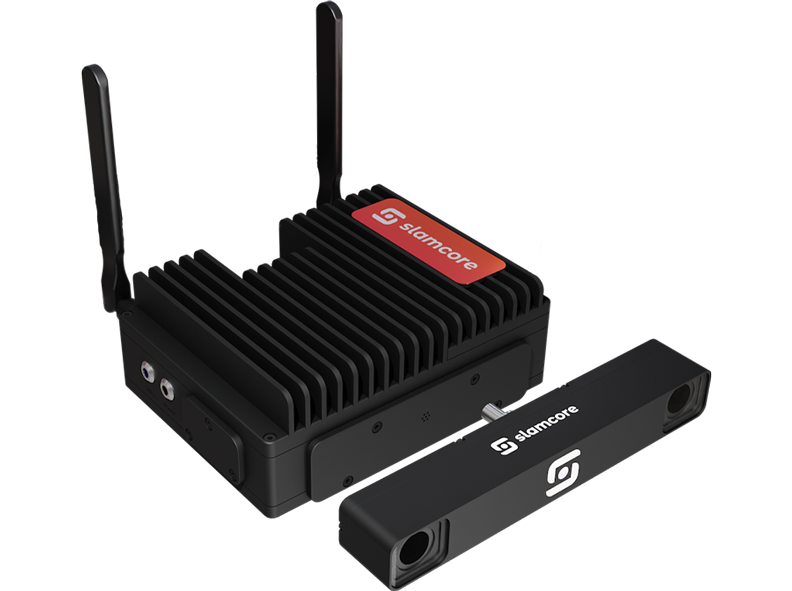
C5MI equips forklifts, reach-trucks, and tuggers with live location and object data straight from a retrofit compute-and-camera module. No beacons, no added infrastructure, so a fleet starts producing usable data on day one.

It layers real-time visual and audio warnings onto Aware-equipped vehicles the moment someone enters the vicinity. C5MI deploys it alongside our safety and facilities work to cut near-miss incidents without adding wearables or retraining operators.
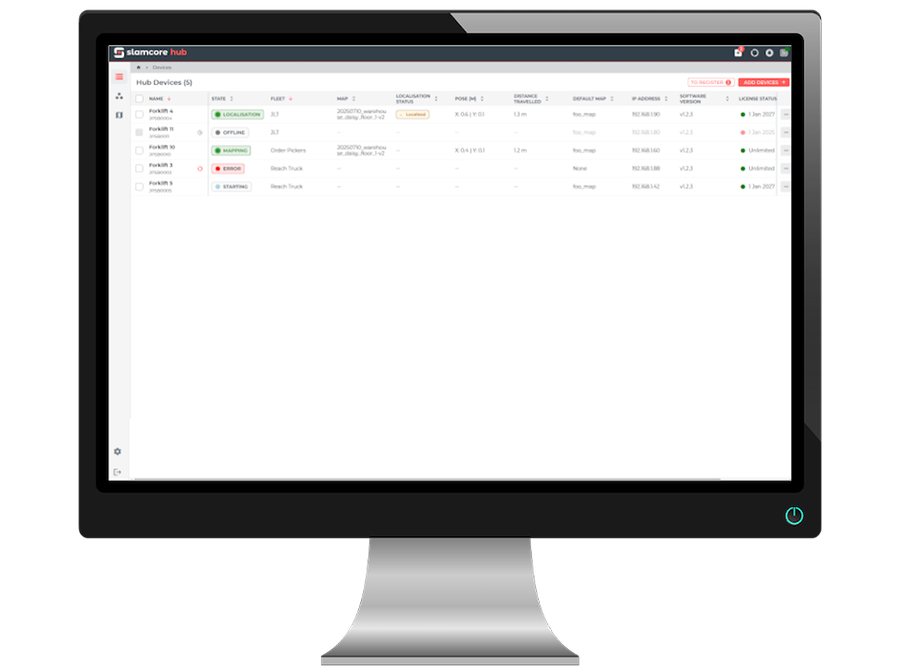
It commissions, configures, and monitors every device from one secure platform. C5MI connects that platform to SAP®, WMS, and BI systems already running in your facility, so fleet data joins one connected operational picture.

“
Slamcore gives us a vision-based alternative to fixed-infrastructure RTLS, and that changes the calculus for our federal and commercial customers. We can outfit a fleet vehicle by vehicle, without beacons, tags, or a facility retrofit, and connect that positioning and perception data into SAP and our Live Warehouse platform. For customers weighing a months-long infrastructure project against a rollout measured in days, that’s the difference that gets a program approved.
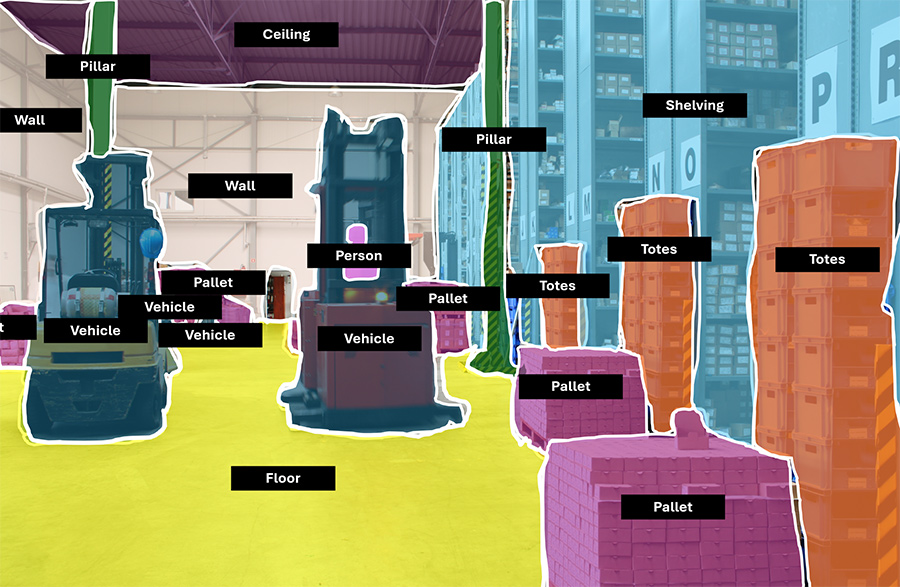
Object detection and semantic segmentation identify pallets, totes, vehicles, and pedestrians in real time, turning a single camera feed into a live read of everything moving through the floor. C5MI connects that stream through Slamcore Hub into SAP, WMS, and fleet management systems, so every detection becomes data your ERP can act on.
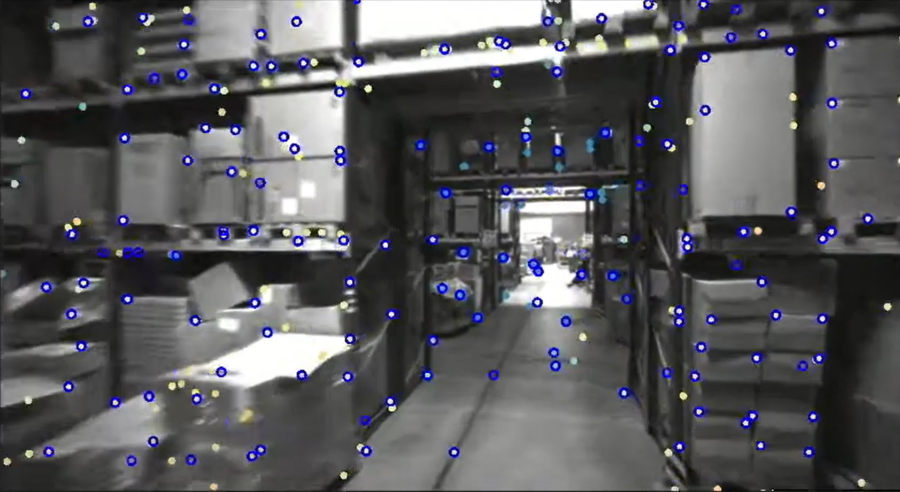
Visual-inertial SLAM processes stereo camera images into a live 3D map, correcting for drift through loop closure every time a vehicle revisits an area, even in tight aisles or dim light. C5MI turns that positioning data into RTLS-grade fleet visibility, streamed into SAP and the rest of your operational systems.
Stage 6
The system handles tasks.
The team sets strategy.
At full maturity, the supply chain does not wait for human decisions on routine matters. It makes them. Robots execute warehouse tasks, RPA handles transactional processes, and AI optimizes routing, scheduling, and inventory positioning. Goal-driven autonomous execution and dynamic re-tasking keep work moving while people shift from executing to overseeing systems.
Through the Automation Center of Excellence, AI practice, and Industry 4.0 capabilities, C5MI® helps organizations ready for autonomy deploy robotics, RPA, and autonomous execution as one coordinated model, not disconnected tools.
Stage 5
Stop reacting to events.
Start managing what is next.
This is the shift from reactive to proactive. The organization can see and respond but still reacts afterward. Predictability means the system anticipates what is coming, using predictive scoring, inventory forecasting, and Digital Reliability-Centered Maintenance (DRCM®) to flag demand shifts, supply disruptions, and production risks early. Leaders stop firefighting and start managing forward.
Through Live Warehouse predictive capabilities, inventory forecasting, and DRCM, C5MI® aligns inventory policy and planning with what comes next, shifting leadership from reaction to forward confidence.
Stage 4
You see what is happening.
Now the operation can act.
Visibility changes what you know. Adaptability changes what you do with it. With confidence in the data, real-time information moves from observation to action: dynamic tasking, default responses to exceptions, and workforce adjustments made in minutes rather than hours. The operation adapts to live data as it arrives, not to what a shift debrief reveals afterward.
Through the SCAR Workforce Enablement module and Live Warehouse event-driven capabilities, C5MI® gives operations governance and tools to act consistently on live data across every site.
Stage 3
The data is in the system.
Now see what is happening.
At this point, the integrations are in place and the data is there, but operations cannot see it in real time. Teams still run on lagging reports, periodic system checks, and verbal updates. This stage changes that. Instead of finding out what happened after the fact, you see what is happening as it unfolds, with live status across warehouse, manufacturing, and logistics.
Through Live Warehouse and the SCAR Live Visibility module, C5MI® turns integrated data into a single version of truth and a common operational picture, giving supervisors and leaders real-time status everywhere.
Stage 2
The systems are in place.
Now they need to connect.
This is where foundational platforms are in place but operating in isolation from one another. IT systems hold transactional data. OT systems, such as sensors, equipment, production lines, and warehouse automation, generate operational data. The two worlds are not connected, so teams still decide with incomplete information, and no one has cross-site visibility.
Through Digital Core integration capabilities and the SCAR EWM Transformation module, C5MI® bridges IT and OT, aligning systems, rationalizing applications, building auditability, and connecting data across sites.
Stage 1
You invested in the platform. Now it needs to perform.
At this stage, C5MI® builds an adaptive foundation on SAP® solutions, including SAP S/4HANA®, SAP Extended Warehouse Management (SAP EWM), SAP Transportation Management (SAP TM), and SAP Enterprise Asset Management. Most organizations arrive here with the investment made but the performance missing. The gap between what the system promised and what the operation actually gets is where C5MI starts.
By standardizing, operationalizing, sustaining, and remediating SAP Digital Core systems, C5MI delivers the performance organizations invested in and maintains it long after go-live, keeping the operation at its best.


